GENEVA-BASED. INTERNATIONAL IN PURPOSE.
GENEVA-BASED. INTERNATIONAL IN PURPOSE.
War’s invisible harms made visible.
War’s invisible harms made
visible.
War’s invisible harms made visible.
Grounded in neuroscience and survivor-centered ethics.
Grounded in neuroscience and survivor-centered ethics.
The harms of war do not end with what can be seen. They can persist in the brain, body, memory, identity, and relationships long after the immediate violence has ended.

Invisible Harms International
Geneva, Switzerland
Brain & Body Invisible injury, toxic exposure, and neurocognitive effects may persist without obvious external signs.
Memory & Identity Trauma and moral injury can reshape memory, emotion, identity, and a person’s sense of self.
Trust & Participation Invisible harms can disrupt relationships, erode trust, and limit participation in family, community, and civic life.
The harms of war do not end with what can be seen. They can persist in the brain, body, memory, identity, and relationships long after the immediate violence has ended.
Invisible Harms International
Geneva, Switzerland
Brain & Body Invisible injury, toxic exposure, and neurocognitive effects may persist without obvious external signs.
Memory & Identity Trauma and moral injury can reshape memory, emotion, identity, and a person’s sense of self.
Trust & Participation Invisible harms can disrupt relationships and trust, limiting participation in family, community, and civic life.
OUR WORK
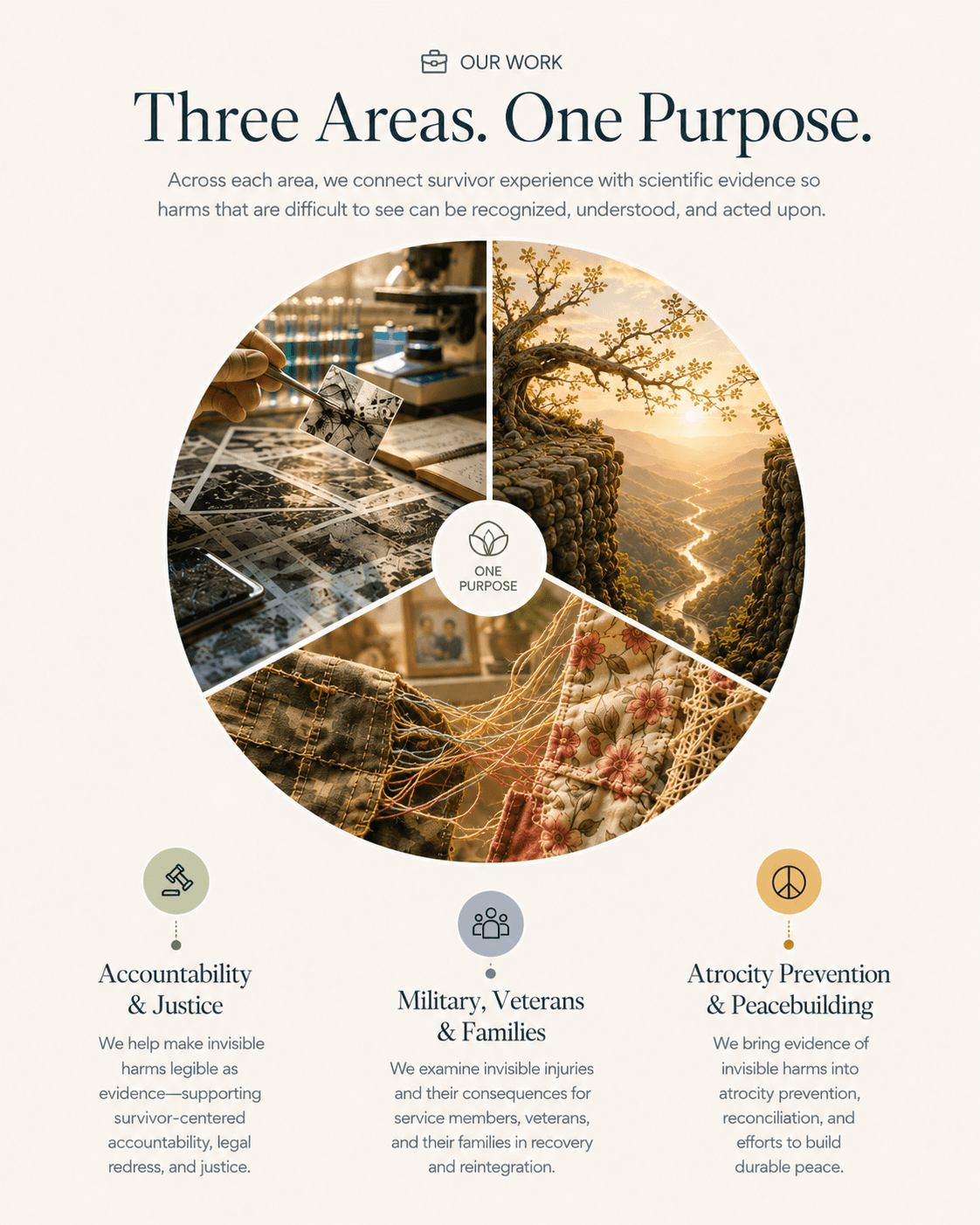
Three Areas. One Purpose.
Across each area, we connect survivor experience with scientific evidence so harms that are difficult to see can be recognized, understood, and acted upon.

Accountability & Justice
We help make invisible harms legible as evidence—supporting survivor-centered accountability, legal redress, and justice.

Atrocity Prevention & Peacebuilding
We bring evidence of invisible harms into atrocity prevention, reconciliation, and efforts to build durable peace.

Military, Veterans & Families
We examine invisible injuries for service members, veterans, and their families in recovery and reintegration.
OUR APPROACH
From experience to evidence to action.
From experience to evidence to action.
Across our work, we begin with what people have lived through, use rigorous science and ethical inquiry to bring invisible harms into view, and help translate that knowledge into meaningful action.
EXPERIENCE
EVIDENCE
ACTION

Start with lived experience.
We begin by listening to survivors, affected communities, service members, veterans, and families—grounding our work in dignity, safety, and what matters to them.

Build rigorous evidence.
We draw on neuroscience, psychology, and neuroethics to investigate harms that may be difficult to see, describe, or document through conventional means.

Put evidence to work.
We translate what we learn into practical pathways for accountability, prevention, recovery, reconciliation, and more durable peace.
FEATURED INITIATIVE
CHEMPRINTS: Making the invisible consequences of chemical attacks visible.
CHEMPRINTS: Making the invisible consequences of chemical attacks visible.
CHEMPRINTS (Chemical-Attack Profiling of Injury & Trauma Survivors) is a funded initiative already underway, bringing survivors, lawyers, scientists, and institutions together to build evidence that can support accountability and action.
CHEMPRINTS (Chemical-Attack Profiling of Injury & Trauma Survivors) is a funded initiative already underway, bringing survivors, lawyers, scientists, and institutions together to build evidence that can support accountability and action.
Build with survivors.
We meet with survivors, some of whom have joined the research team, ensuring survivor-centered focus and cultural authenticity. These team members help shape how lived experience and invisible harms are studied.
Build with survivors.
We meet with survivors, some of whom have joined the research team, ensuring survivor-centered focus and cultural authenticity. These team members help shape how lived experience and invisible harms are studied.
Connect science and law.
We work with lawyers representing survivors to understand evidentiary needs and legal admissibility, while collaborating with a leading molecular laboratory to develop scientific approaches to possible markers of chemical exposure.
Connect science and law.
We work with lawyers representing survivors to understand evidentiary needs and legal admissibility, while collaborating with a leading molecular laboratory to develop scientific approaches to possible markers of chemical exposure.
Bring evidence where it matters.
We engage government representatives and international institutions working on accountability, evidence collection, and policy—helping connect emerging knowledge with the people and systems positioned to act on it.
Bring evidence where it matters.
We engage government representatives and international institutions working on accountability, evidence collection, and policy—helping connect emerging knowledge with the people and systems positioned to act on it.
The harms of war do not end with what can be seen. They can persist in the brain, body, memory, identity, and relationships long after the immediate violence has ended.
Invisible Harms International
Geneva, Switzerland
Brain & Body Invisible injury, toxic exposure, and neurocognitive effects may persist without obvious external signs.
Memory & Identity Trauma and moral injury can reshape memory, emotion, identity, and a person’s sense of self.
Trust & Participation Invisible harms can disrupt relationships and trust, limiting participation in family, community, and civic life.
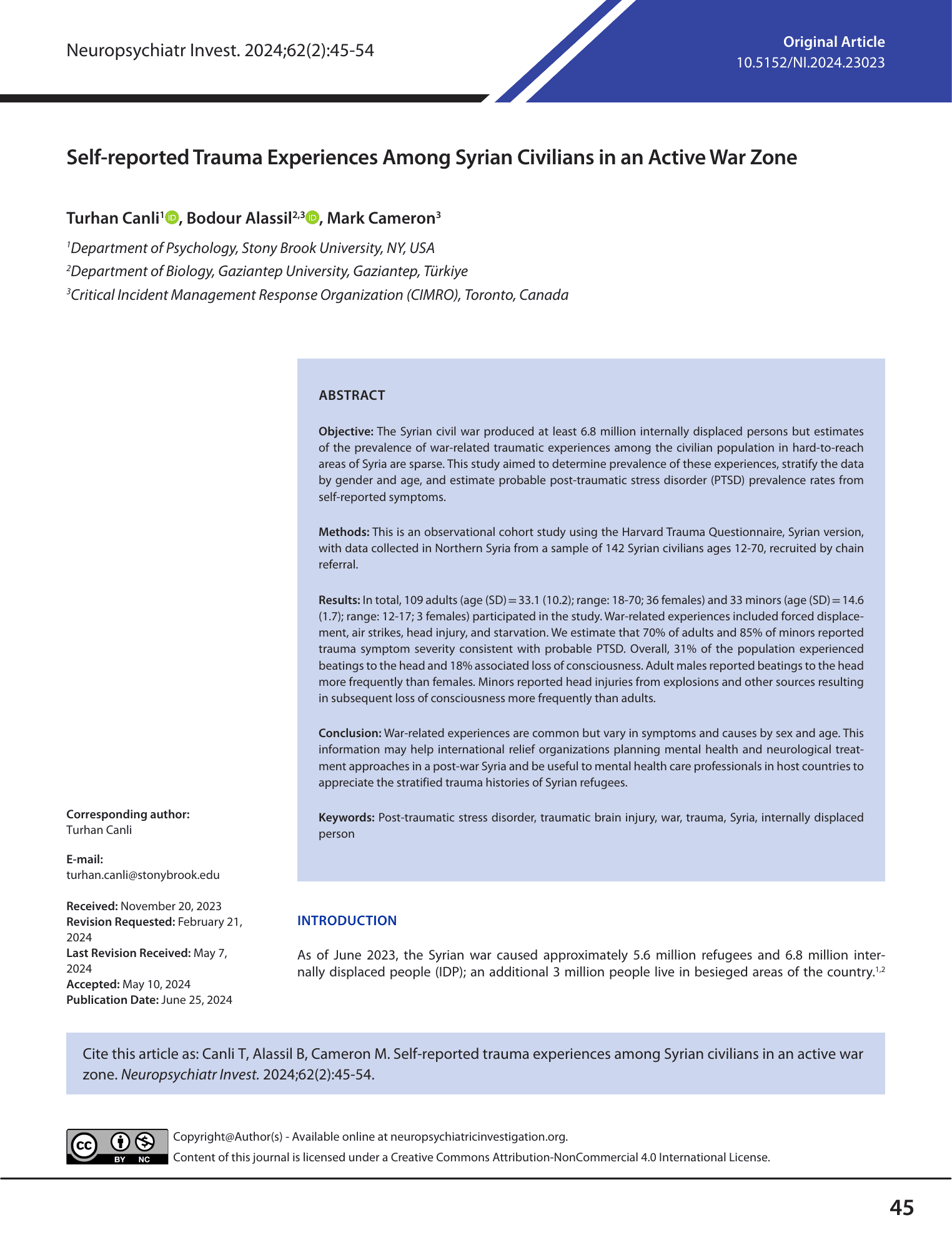
INSIGHTS & PUBLICATIONS
Knowledge that brings invisible harms into view.
Knowledge that brings invisible harms into view.
Explore research, publications, and analysis that deepen understanding of invisible harms and connect evidence with accountability, peacebuilding, and recovery.


CONNECT WITH IHI
Start a conversation.
If your experience or work touches conflict-related invisible harms, we welcome the opportunity to connect.